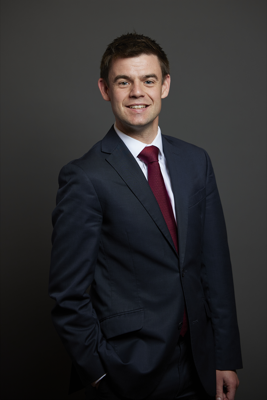
Phil Brickell's most distinctive work in recent months has centred on economic crime. He has lobbied ministers directly for a dedicated crime-fighting fund to tackle fraud, money laundering and corruption, drawing on a decade's prior experience in financial crime. That specialism also surfaced in local coverage from The Bolton News, which has reported his meetings with law enforcement and tech companies on fraud prevention — positive coverage that positions him as an active constituency advocate. His one rebel vote, backing a motion to hold parliamentary proceedings in private, was a break from convention but a minor procedural matter rather than a policy split with Labour.
At 79% voting participation, Brickell sits a little below the typical Commons average. He is a near-perfect party-line voter at 99.8%, with no meaningful deviations on major government legislation — he backed the Immigration and Asylum Bill at second reading and voted with the government on trade union ballot modernisation and the Windsor Framework machinery regulations. His stance profile shows strong alignment on workers' rights and fiscal responsibility but notably low scores on civil liberties, parliamentary scrutiny and Lords oversight — all consistent with a loyal government backbencher. His 258 speech contributions span economy, defence, local government and fiscal policy, suggesting broad rather than narrow engagement.
Brickell sits on the Foreign Affairs Committee, which likely explains his public criticism of Trump's threats over Greenland — foreign policy features prominently in his speech record. He also challenged university regulators over the University of Greater Manchester in The Guardian, signalling a willingness to take on institutions. His recent 90-day local news coverage is more muted, covering planning, transport and community issues. Overall, Brickell is a loyal but active backbencher with a specialist focus on financial crime that distinguishes him from most of his 2024 intake colleagues.